Solar AC in Kuwait: Smarter Cooling for Every Home

When temperatures in Kuwait regularly exceed 45°C, air conditioning becomes a necessity rather than a luxury. However, keeping your home cool throughout the long summer months can significantly increase electricity consumption and energy costs.As more homeowners and businesses look for energy-efficient alternatives, solar air
conditioners have become an increasingly popular solution. By using solar energy to power cooling systems, they can reduce electricity usage, lower environmental impact, and decrease reliance on the electrical grid. But are they worth the investment? Can they cool your home as effectively as a conventional AC? And how many AC solar panels are needed to run one?
These questions often cause confusion. Some people believe solar air conditioners only work in direct sunlight, while others assume every system requires expensive battery storage. Many are also unsure whether a solar AC can replace a traditional unit or simply complement it.
This guide explains everything you need to know before investing in a solar air conditioner in Kuwait. including how these systems work, their benefits, costs, installation, and maintenance. You’ll also discover other practical solar solutions, such as outdoor lighting and solar water heaters, to help improve your home’s energy efficiency.
What Is a Solar Air Conditioner?
A solar air conditioner is a cooling system that uses electricity generated by solar panels to power your home, reducing the amount of electricity drawn from the grid.
Unlike conventional air conditioners that rely entirely on utility power, solar-powered systems use sunlight to offset some—or even most—of their energy needs.
Depending on the setup, a solar AC may:
- Run primarily on solar power during the day before switching to the grid when needed.
- Combine solar energy with grid electricity for improved efficiency.
- Include battery storage to use excess solar energy after sunset.
A typical system includes:
- Solar panels that generate electricity.
- An inverter that converts solar power into usable electricity (for AC-powered systems).
- The air conditioning unit.
- Optional battery storage for greater energy independence.
One of the biggest misconceptions is that a solar air conditioner stops working at night or on cloudy days. In reality, most modern systems are hybrid systems that automatically switch to grid electricity whenever solar production isn’t enough, ensuring uninterrupted cooling.
For Kuwait, where sunshine is available most of the year, this makes solar air conditioning an especially practical solution. Instead of relying entirely on the grid during the hottest hours of the day, the system uses the same sunlight, causing the heat to help power your cooling.
How Does a Solar Air Conditioner Work?
Although the technology sounds complex, the process is straightforward.
1. Solar panels generate electricity
Solar panels installed on your roof capture sunlight and convert it into direct current (DC) electricity. The amount of power produced depends on factors such as panel efficiency, roof orientation, and daily sunlight exposure.
2. The electricity powers your air conditioner
If your system uses a conventional AC unit, the electricity passes through an inverter that converts DC power into alternating current (AC). Some modern solar air conditioners operate directly on DC power, reducing energy losses and improving efficiency.
Once converted, the electricity powers the air conditioner just like regular utility electricity. From your perspective, nothing changes—you simply adjust the temperature using your thermostat or remote.
3. The system automatically uses backup power
When solar production decreases, such as during the evening or cloudy weather, the system automatically:
Switches to grid electricity,
- Draws power from battery storage (if installed), or
- Uses a combination of both.
This seamless transition means you enjoy continuous cooling without needing to switch between power sources manually.
Do Solar Air Conditioners Need Special Solar Panels?
A common misconception is that air conditioners require special AC solar panels.
In reality, standard solar panels generate electricity the same way regardless of which appliance they’re powering.
What matters is the overall system design. The number of panels, the inverter size, and your air conditioner’s energy consumption determine how much of your cooling can be powered by solar energy.
For example, a home looking to offset daytime cooling costs may need only a modest solar installation, while a larger villa running multiple air conditioners will require a larger system.
Rather than buying special “air conditioner panels,” the goal is to install a solar system that matches your home’s energy needs.
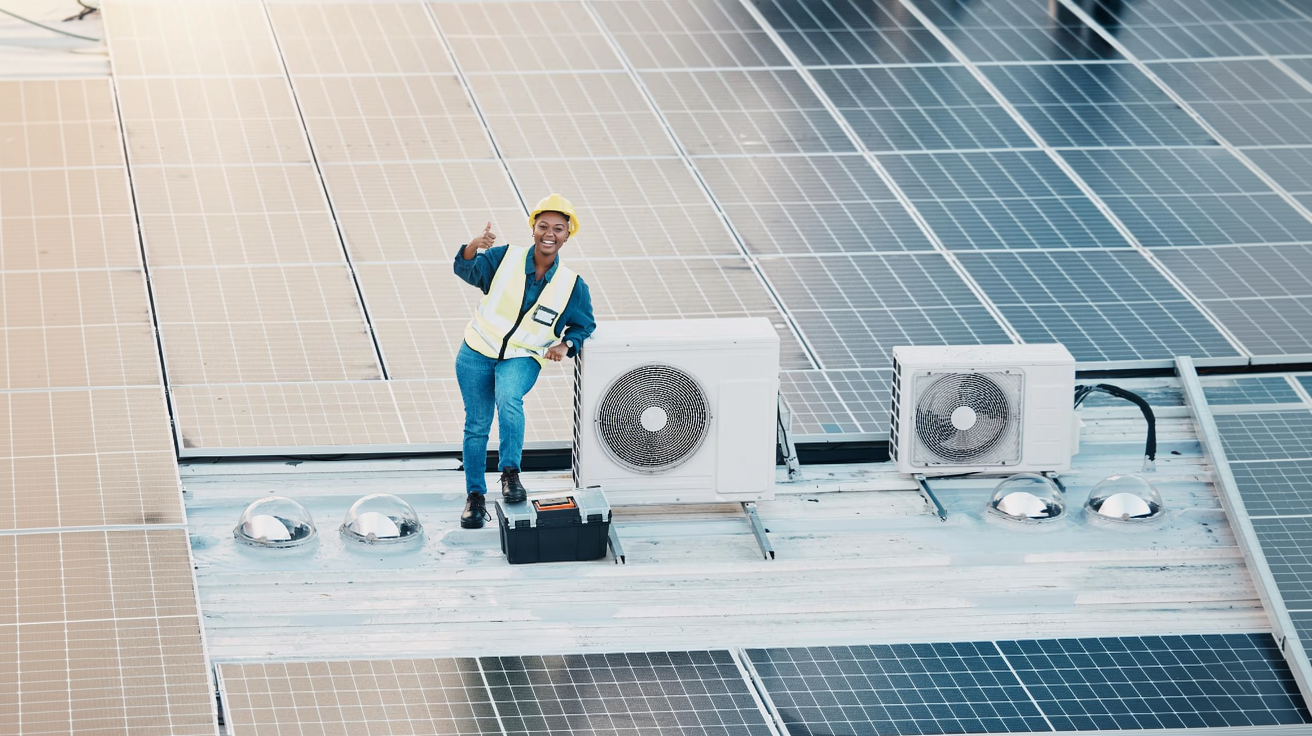
Types of Solar Air Conditioners
Not all solar air conditioners work the same way. Understanding the different types will help you choose a system that fits your home’s energy needs, budget, and long-term goals.
The three main options are DC solar air conditioners, AC solar air conditioners, and hybrid solar air conditioners.
1. DC solar air conditioners
A DC solar air conditioner runs primarily on the direct current (DC) electricity generated by solar panels. Because it doesn’t rely as heavily on converting electricity, it operates more efficiently and experiences fewer energy losses.
Many DC systems also work well with battery storage, making them a popular choice for off-grid properties.
Best for:
- Remote homes and farms
- Desert camps and chalets
- Off-grid properties
- Homeowners seeking maximum solar efficiency
Advantages:
- Excellent energy efficiency
- Lower conversion losses
- Works well with battery storage
- Ideal for off-grid use
Considerations:
- Higher upfront cost
- Fewer models available
- May require specialized installation
2. AC solar air conditioners
An AC solar air conditioner operates much like a traditional air conditioner. The main difference is that electricity generated by the solar panels passes through an inverter before powering the unit.
Because they integrate easily with existing electrical systems, they’re a popular option for homes that already have rooftop solar panels.
Best for:
- Existing homes
- Apartments
- Residential villas
- Homes with solar panel systems
Advantages:
- Compatible with standard household wiring
- Wide range of available models
- Easy to integrate into existing systems
- Familiar installation process
Considerations:
- Some energy is lost during power conversion
- Performance depends on inverter quality and solar system size
3. Hybrid solar air conditioners
Hybrid systems combine solar power with electricity from the grid, automatically switching between the two whenever needed.
During sunny hours, they prioritize solar energy. When sunlight isn’t sufficient—such as at night or during cloudy weather—they seamlessly switch to grid electricity, ensuring uninterrupted cooling.
For most homeowners, this offers the best balance of efficiency, reliability, and long-term savings.
Best for:
- Family homes
- Daily residential use
- Homeowners looking to reduce their electricity bills
- Properties connected to the electrical grid
Advantages:
- Reliable cooling all day
- Lower electricity consumption
- Automatic switching between power sources
- Excellent balance of performance and cost
Considerations:
- Higher installation cost than a conventional AC
- Savings depend on the size of the solar system
- Professional system design is recommended
- Browsing different listings on 4Sale makes it easier to evaluate your options before making a purchase.
Which AC Types Are Best for Homes in Kuwait?
The best option depends on your property and energy requirements.
For most homes in Kuwait that are connected to the electrical grid, a hybrid solar air conditioner is the most practical choice. It makes the most of Kuwait’s abundant sunshine during the day while automatically switching to grid electricity whenever additional power is needed.
If you own a remote farm, desert camp, or off-grid property, a DC solar air conditioner paired with battery storage can provide greater energy independence.
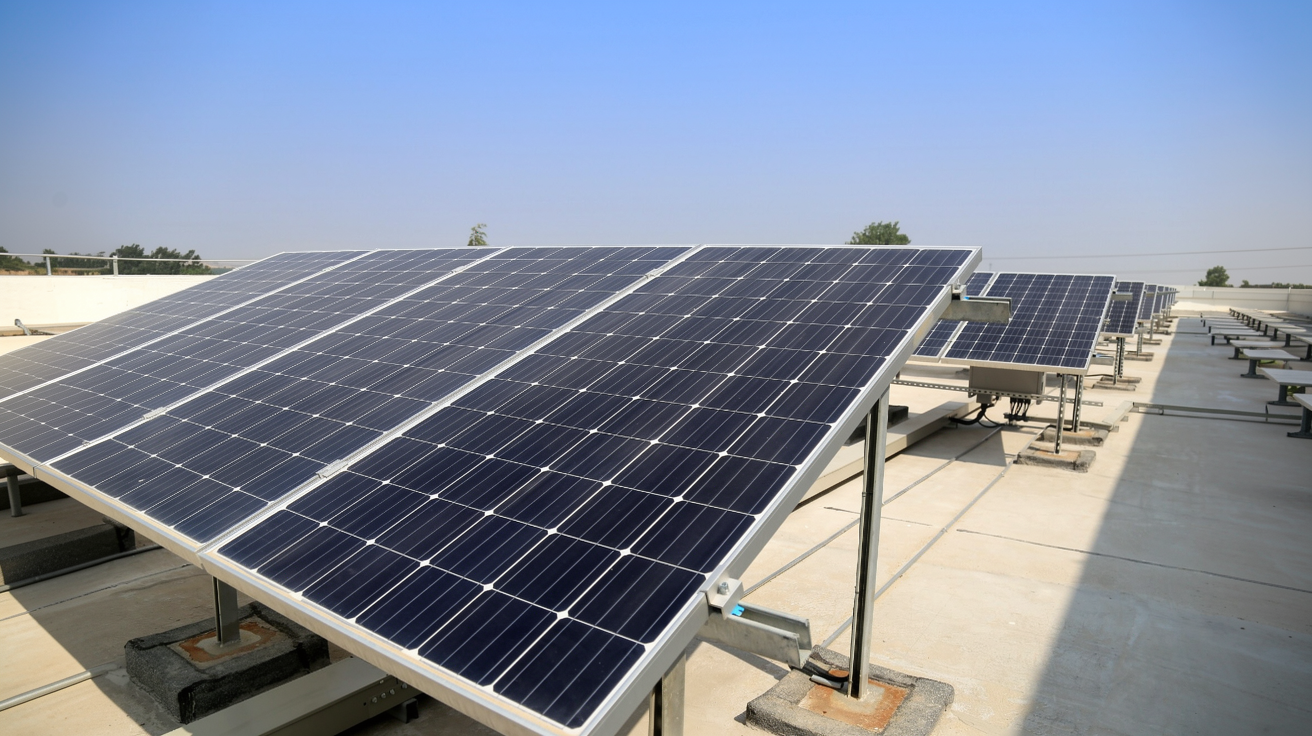
If your home already has a rooftop solar system, an AC solar air conditioner is often the easiest solution, as it integrates seamlessly with your existing setup.
Rather than asking which type is best overall, focus on choosing the one that best matches your property’s energy needs and your long-term goals.
Solar Air Conditioner vs. Traditional Air Conditioner
Both systems provide effective cooling, but the biggest difference is how they consume energy.
A traditional air conditioner relies entirely on electricity from the grid, while a solar air conditioner uses solar energy to offset some—or even most—of its power consumption. Although the initial investment is higher, lower operating costs can make solar a more economical option over time.
|
Feature |
Traditional AC | Solar Air Conditioner |
| Energy Source |
Grid electricity |
Solar energy with grid backup |
| Electricity Usage |
High |
Significantly lower during sunny hours |
| Initial Cost |
Lower |
Higher |
| Operating Costs |
Higher over time |
Lower long-term |
| Installation |
Standard |
Requires solar system planning |
| Environmental Impact |
Higher carbon emissions |
Lower emissions and cleaner energy |
| Performance |
Consistent |
Consistent, especially with hybrid systems |
For homeowners in Kuwait, where air conditioning is used for much of the year, the long-term savings can make a solar air conditioner a worthwhile investment.
More Than Lower Electricity Bills
Reducing electricity costs is one of the biggest reasons homeowners choose a solar air conditioner—but it’s far from the only benefit.
A solar AC should be viewed as a long-term investment in your home’s energy efficiency. While the upfront cost is higher than a conventional unit, the savings on electricity can help offset that investment over time, especially in Kuwait’s hot climate.
Beyond lower energy bills, solar air conditioners offer several additional advantages:
- Reduced dependence on grid electricity
- Lower demand on the electrical grid during the peak summer months
- A smaller environmental footprint through the use of renewable energy
- Increased property value as energy-efficient homes become more desirable
- A strong foundation for expanding into other solar-powered technologies in the future
Rather than being just another appliance, a solar air conditioner can be the first step toward creating a more energy-efficient home.
Other Solar Appliances Worth Considering
While air conditioning is often the largest contributor to electricity consumption in Kuwaiti homes, it’s not the only appliance that can benefit from solar energy.
Air conditioning is just one way to benefit from renewable energy. Other appliances, including outdoor lighting, water heaters, cookers, and refrigerators, can also contribute to a more energy-efficient home.
Solar ovens
A solar oven, also known as a solar cooker, uses sunlight to cook food without electricity or gas. In Kuwait’s sunny climate, it’s an eco-friendly option for outdoor cooking and everyday use.
There are three main types:
Box solar ovens
These insulated ovens trap heat inside a reflective box, making them ideal for slow-cooking meals such as rice, stews, and casseroles.
Parabolic solar ovens
Using a curved reflective dish, these ovens concentrate sunlight to reach high temperatures quickly. They’re ideal for boiling, grilling, and faster cooking but require occasional repositioning to follow the sun.
Tube (vacuum) solar ovens
These advanced models use vacuum-insulated glass tubes to retain heat efficiently, allowing them to cook effectively even when sunlight isn’t perfectly consistent.
Solar water heaters
Solar water heaters are one of the most cost-effective solar investments for homeowners in Kuwait.
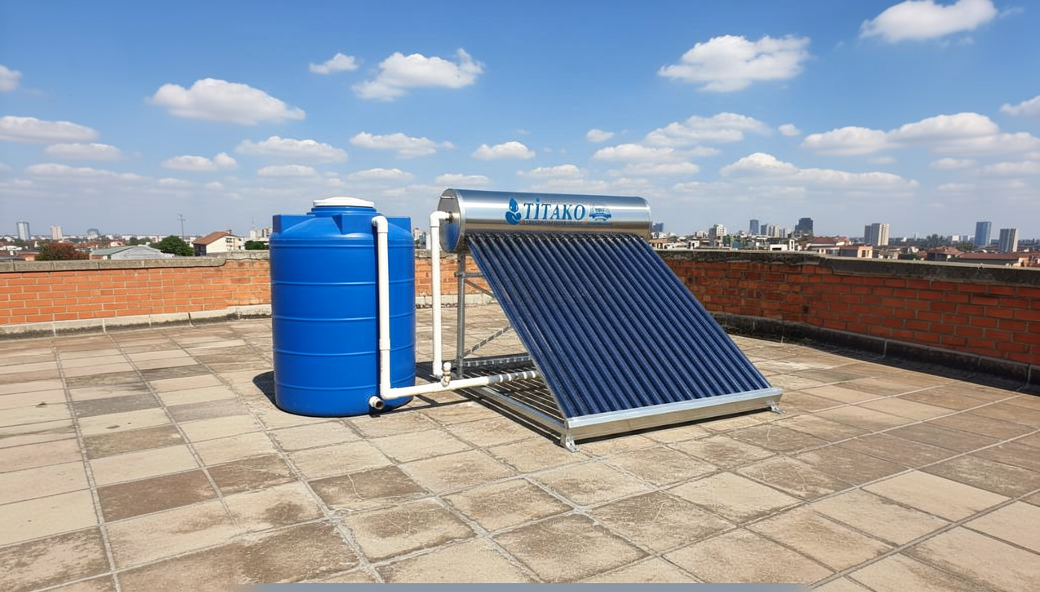
They use rooftop solar collectors to heat water throughout the day, significantly reducing the need for electric water heaters. Given Kuwait’s year-round sunshine, they can deliver substantial long-term energy savings.
Solar refrigerators
Solar refrigerators operate on DC power generated by solar panels, making them ideal for:
- Farms
- Desert camps
- Chalets
- Fishing boats
- Other off-grid locations
Combined with a small solar panel system and battery storage, they provide reliable refrigeration without relying on the electrical grid. For most homes, however, traditional refrigerators remain the more practical choice, offering a wider range of sizes, features, and energy-efficient models.
On 4Sale, you’ll find a wide range of solar-powered products to help you build a more energy-efficient home at your own pace.
Solar Inverter Backup Systems
If replacing your existing air conditioner isn’t practical, a solar inverter backup system can still help reduce electricity consumption.
Instead of installing a dedicated solar AC, these systems allow your current appliances, including your air conditioner, to use solar-generated electricity during the day.
Excess energy can also be stored in batteries for use at night or during power outages.
For homeowners planning a complete residential solar setup, this can be an excellent alternative.
Starting Your Solar Journey at Home
Switching to solar doesn’t have to happen all at once.
A practical approach is to begin with smaller solar-powered products, such as outdoor lighting, which is affordable, easy to install, and starts reducing electricity consumption immediately.
When you’re ready for a larger investment, upgrading the room where your air conditioner runs the most to a hybrid solar air conditioner can make a noticeable difference in your home’s overall energy usage.
From there, you can gradually expand your system with additional solar-powered appliances as your needs and budget allow.
Ready to Find the Right Solar Cooling Solution?
With Kuwait enjoying sunshine for most of the year, investing in a solar air conditioner can be a practical way to reduce electricity consumption, lower long-term cooling costs, and create a more energy-efficient home. The right choice—whether a DC, AC, or hybrid system—depends on your property’s size, cooling needs, and budget.
Before making a purchase, it’s worth comparing different systems, features, and prices to find the option that best suits your requirements.
On 4Sale, you can explore a wide range of solar air conditioners, solar panels, and other solar-powered products from trusted sellers across Kuwait, making it easier to compare listings and make a confident decision.


